.jpg?table=block&id=29d76b1d-f1a8-8072-a9bf-cc78d1c7d881&cache=v2)


Prerequisites :
- You must be familiar with at least one programming language (Python or JavaScript) and its basic concepts such as loops, variables, functions, and other fundamentals.
- You should have built at least one full-stack project, or a basic project like an e-commerce website. This will help the course make more sense to you.
1. Foundations (Absolute Basics)
- What is
DevOps? (culture, principles, lifecycle)
- DevOps vs Agile vs SDLC
- CI/CD basic idea
- Developer → Ops communication gap
- Overview of DevOps tools ecosystem
2. OS & Terminal Fundamentals
- Linux basics (commands, permissions)
- aliases, .bashrc/.zshrc ,
- Shell scripting (bash scripting)
- Environment variables
- Process management, Cron jobs , networking commands (ping, netstat, curl)
- interactive vs non interactive shells
- [File transfer - ftp, scp] , [ File permissions ].
- Writing your own Bash script - using variables, loops, conditionals, and functions.
- System monitoring (top, htop, df, du)
- args in bash scripts , grep
- stderr, stdout, File descriptors, piping
Projects:- System Info CLI Tool (Beginner)
- Automated Backup Script (Intermediate)
3. Version Control (Git & GitHub)
- Git basic commands (init, clone, commit, push, pull, branch)
- Git branching strategies (Git Flow)
- Merging & resolving conflicts
- GitHub Actions overview (for CI)
4. Continuous Integration (CI)
- CI concept and workflow
- Jenkins fundamentals (setup, pipeline creation)
- GitHub Actions
- Build tools: Maven, npm
- automate the process of compiling, testing, packaging, and managing dependencies.
- Running unit tests in CI
- Code quality checks ( ESLint)
5. Continuous Delivery & Deployment (CD)
- CD pipelines overview
- Blue-Green & Canary Deployments (Basic)
- Rolling updates
- Automated deployment scripts
6. Containers & Docker
- What is containerization?
- Docker architecture
- Dockerfile (writing and optimization)
- Docker Compose
- Docker volumes & networks
- Multi-stage builds
- Pushing images to Docker Hub / private registry
7. Kubernetes (K8s) — Container Orchestration
- Why Kubernetes? (problem it solves)
- K8s core components (Pod, ReplicaSet, Deployment, Service)
- ConfigMaps, Secrets
- Namespaces
- Ingress & LoadBalancer
- Persistent Volumes (PV, PVC)
- Helm charts
- Rolling updates in K8s
- K8s dashboard & kubectl commands
- Autoscaling (HPA, VPA)
8. CDNs and Object stores
- What are object stores, Why object stores?
- Intro to CDNs , S3, R2 for assets
- Cloudfront as a CDN
9. Infrastructure as Code (IaC)
- Concept of IaC
- Terraform basics (providers, variables, outputs)
- Creating AWS infrastructure using Terraform
- Ansible basics (playbooks, inventory, roles)
- Ansible vs Terraform (use-cases)
10. Cloud Platforms (AWS Focus)
- Cloud basics (IaaS, PaaS, SaaS)
- AWS Core Services:
- EC2, S3, IAM, VPC, EBS, ELB, RDS
- Networking in AWS (CIDR, Subnet, Route Table, NAT)
- AWS CLI & SDK
- Hosting applications on EC2
- Load Balancer + Auto Scaling
- AWS EKS (Kubernetes on AWS)
- CloudWatch basics for monitoring
11. Security & Secrets Management
- SSH keys & access management
- IAM roles, users, policies
- Secrets management with Vault / AWS Secrets Manager
- SSL certificates
- Secure pipeline practices (avoid hardcoded secrets)
12. Monitoring & Logging
- Importance of observability
- Metrics, logs, tracing (3 pillars)
- Prometheus (setup, alerts)
- Grafana (dashboards)
- Application performance monitoring (APM tools: New Relic, Datadog)
13. Alerting & Incident Response
- Setting alerts with Prometheus + Alertmanager
- Slack / Email / PagerDuty integration
- Status pages (e.g., BetterStack style)
- On-call management and SLO/SLI/SLA basics
- Uptimematrix : A monitoring tool creating something like :
 incident_ioAll-in-one incident management platform | incident.io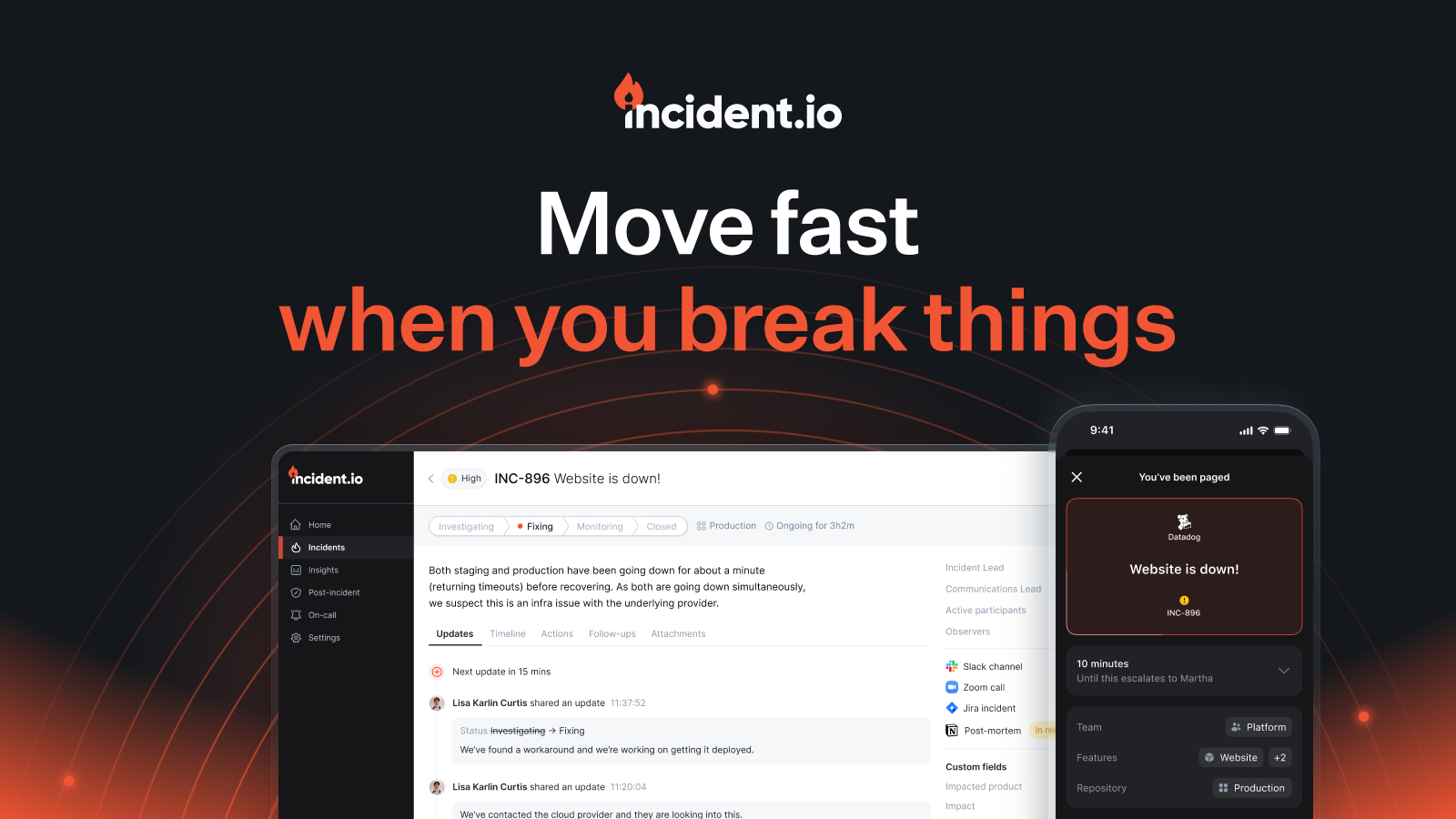
All-in-one incident management platform | incident.io
incident.io is an all-in-one incident management platform unifying on-call scheduling, real-time incident response, and integrated status pages – helping teams resolve issues faster and reduce downtime.
incident_io
Project :
14. Automation Tool
- Puppet Automation tool
- Website scrapper.
15. Networking & Load Balancing (Deep Dive)
- DNS, CDN, HTTP vs HTTPS
- Reverse proxy & Load Balancer (Nginx, HAProxy)
- SSL termination
16. Advanced CI/CD (End-to-End)
- Multi-environment pipelines (dev → staging → prod)
- GitOps (ArgoCD, Flux) - Kubernetes concept based.
- Canary + Blue/Green in Kubernetes
- Rollback strategies
17. Observability + Logging Advanced
- Centralized log aggregation
- Correlating logs, metrics, and traces
- Dashboards for multi-service environments
19. Site Reliability Engineering (SRE) Basics
- What is SRE?
- Error budgets, SLIs, SLAs
- Reliability vs velocity tradeoffs
- Incident management
- Postmortems & blameless culture
20. Advanced Topics & Real Projects
- Full CI/CD pipeline on AWS
- Infrastructure automation from scratch (uptimematrix)
- Real-time monitoring dashboard (Prometheus + Grafana)
- Scaling web app on AWS - Amazon Elastic Kubernetes Service (EKS)
- Setup of GitOps using ArgoCD
- Deployment strategies simulation (Blue-Green, Canary)
21. DevOps Tools You Should Know (Summary Table)
Category | Tools |
CI/CD | Jenkins, GitHub Actions, ArgoCD |
IaC | Terraform, Ansible |
Containers | Docker, Kubernetes |
Cloud | AWS (EC2, S3, EKS, RDS) |
Monitoring | Prometheus, Grafana, Loki |
Security | Vault, Trivy, IAM |
Logging | ELK/EFK Stack |
Version Control | Git, GitHub |
Communication | Slack, PagerDuty |